2016 Summer Institute: Making Art, Making Community
Prepared for Muse Machine by
Michael Sikes, Ph.D., Evaluation Consultant
Muse Machine
- Muse Machine is a nationally recognized arts education organization in Dayton, Ohio. It annually serves 72,000 students and their teachers in 12 counties in southwestern and central Ohio.
- Many of the schools served by Muse have diverse demographics, students from lower SES families, and some with limited English proficiency.
- The mission of Muse is to change the lives of young people through the arts.
- To help attain this mission, Muse Machine conducts an annual four-day Institute with teachers from participating schools.
The Institute
- The Institute was designed as a multi-year partnership with participating teachers and their schools.
- The 2016 Institute featured workshops led by Ping Chong + Company, a globally acclaimed contemporary theatre company.
- The focus of the Institute was Making Art, Making Community.
- The Institute took place at the Metropolitan Arts Center in Dayton, July 11-14.
Ping Chong + Company
- Founded in 1975, Ping Chong + Company uses puppetry, media, dance, and interviews to address issues of global injustice, diversity, and inclusion.
- The 2016 Institute was based on themes of identity, belonging, and sense of place.
- Through participatory learning, teachers developed skills in writing about their own lives, conducting interviews, and developing components of scripts.
- The 2016 Institute goal is that participants will be able to use their own personal experiences and those of their students to make works of art.
Ping Chong
- Ping Chong is an Asian-American theatre director, choreographer, video and installation artist.
- He is the recipient of a numerous honors: a Guggenheim Fellowship, a USA Artist Fellowship, two BESSIE awards, two OBIE awards, and a National Medal of Arts from President Barack Obama.
- His work has been supported by the Jim Henson Foundation and other funders.
Evaluating the Institute
Several questions guided evaluation of the Institute:
- Was the Institute planned and implemented effectively?
- Did participants perceive the Institute as useful and satisfactory?
- Did participants acquire the knowledge and skills being taught in the Institute?
- Did these educators apply their learning in their subsequent work in their schools?
- In what ways did their classrooms and schools change as a result?
The following processes are used to evaluate the Institute:
- A survey of participants, administered online immediately following the Institute
- Interviews with participants, conducted via phone in fall 2016 and continuing
- Continuous review and analysis of planning documents, session handouts, lesson plans, and other artifacts
- Video documentation
- Reporting via multiple formats and to various audiences
The evaluation focuses on two aspects of the Institute:
- Planning and Implementation: The extent to which the Institute was planned and delivered so as to achieve success
- Results: Various outcomes of the Institute in terms of satisfaction, learning, application of learning, and changes to schools
Planning and Implementation
Extensive documentation shows that the Institute was the focus of a continuous process of planning, implementation, and follow up.
Results
The following findings emerged from the evaluation:
1. Satisfaction. Participating teachers were satisfied with their experiences and found value in them.
2. Professional Learning. Participants acquired targeted knowledge and skills.
3. Application of Learning. Participants are applying their learning in their schools.
4. Changes to schools. Preliminary evidence suggests that schools are changing in response to the application of learning.
1. Satisfaction
In professional learning, participant satisfaction is often critical to successful learning.
Satisfaction: Metrics
Overall, participants reported very high satisfaction with the Institute (% responding “Agree” or “Strongly Agree”)

Satisfaction: Key Components
Overall, participants rated components of the Institute as beneficial (% responding “Agree” or “Strongly Agree”)
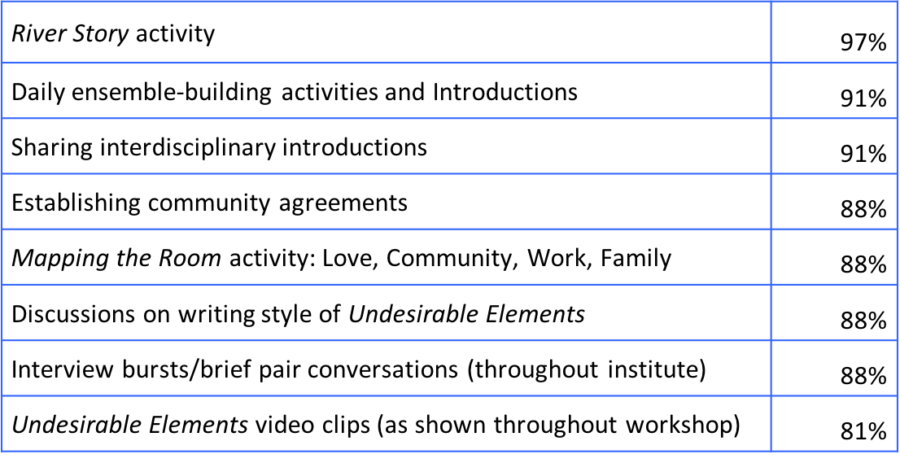
Satisfaction: Open-ended Responses
o“It was a remarkable experience in terms of artistry and education pedagogy. It was one of the best prof experiences of my career. There is so much that can be used in the schools not to mention life.”
o“The quality exceeded my expectations….I did not realize that the Institute would be about telling our personal stories. I am so glad that I attended.”
o“The surprises were all wonderful surprises. I wasn’t really sure what to expect, but there are not enough superlatives in the English language to describe what I experienced.”
o“Sharing is major benefit!”
Satisfaction
o“Very well planned and implemented! The work and activities were very engaging.”
o“I loved Ping Chong and company!!!”
o“Great scaffolding! It really helped me to be more creative.”
o“The morning business session on Monday was too long and the addition of a hands on element would have added in learning and retention of material. I would suggest: https://getkahoot.com/”
Satisfaction: Perceived Usefulness
Survey respondents rated utility of key Institute sessions.
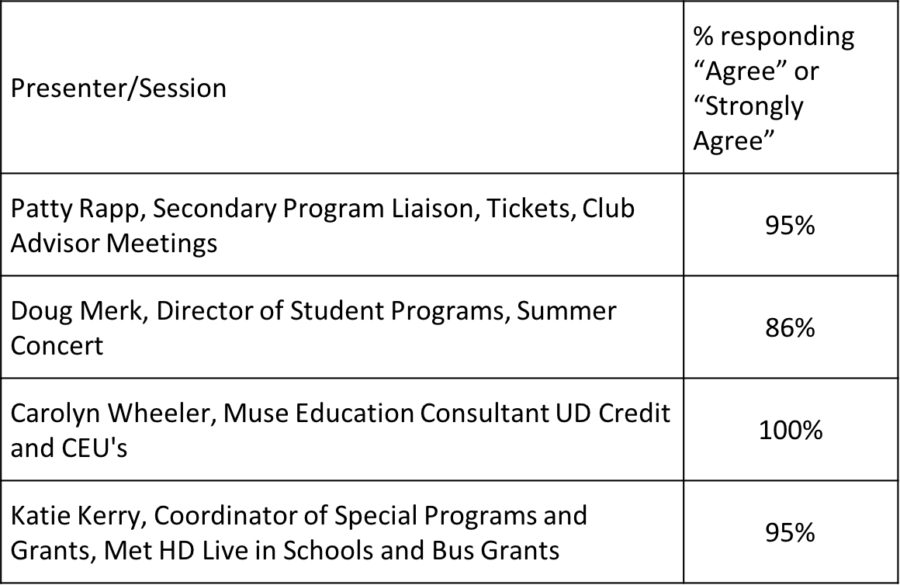
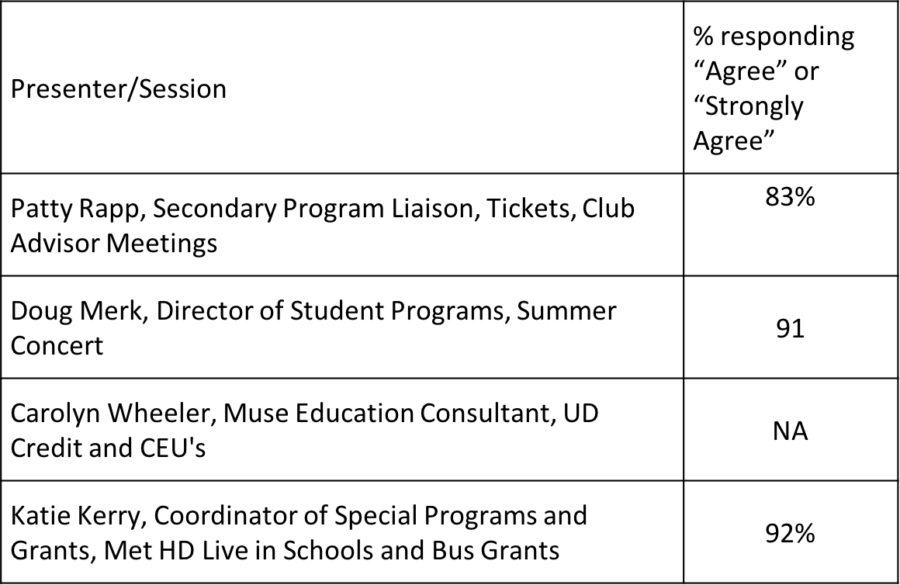
Satisfaction: Individual Sessions
Responses: “The presenter was knowledgeable and professional.”
Satisfaction: Individual Sessions
Responses: “The session was relevant to running my Muse club.”
Satisfaction: Individual Sessions
Responses: “The session gave me ideas that I plan on implementing at my school.”
2. Professional Learning
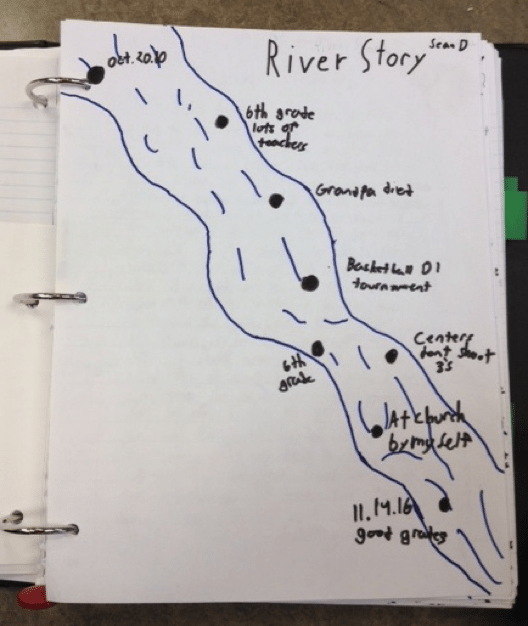
The River Story is one of the powerful techniques teachers learned at the Institute
Professional Learning
The teachers understand that their new learning had significant implications:
o“Performing and seeing the other groups perform on the last day was very powerful. I appreciated the experience from a personal point of view, and in terms of how I am inspired to adapt the experience for my students.”
o“I was reminded that working within limitations can inspire creative solutions. I was also reminded that deep learning can be generated through short bursts of text.”
o“Loved the river story. Also, I loved being able to put someone else’s story into words that made a profound and positive impact.”
Professional Learning
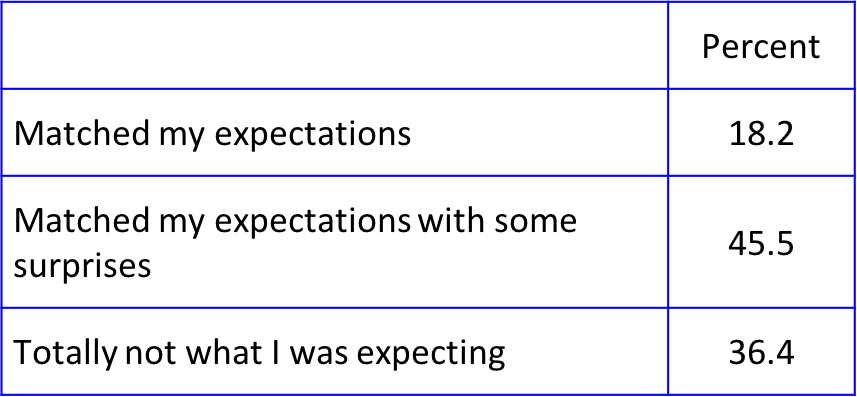
Participants realized that the 2016 Institute would not be like the professional development sessions they had previously experienced.
Question: “Overall, was the Institute what you expected, based on the publicity and communications with Muse Machine?”
Professional Learning: Perceived Value
What was the most helpful thing you learned from this process?
o“Creating a safe space and scaffolding large writing projects.”
o“The importance of creating a cohesive community from a diverse group of people.”
o“To pinpoint be the most helpful thing I learned from this process is a very difficult task. Some of the most important things I learned were: how to build a culture of community; how to make presentations more engaging and meaningful; how facilitate the realization that everyone has a story.”
Professional Learning: Developing Artistry
Participants learned that personal artistry and effective teaching are aligned:
o“Personally, I think that it allowed us to explore being an artist again. We get into being a teacher so much that we forget we are also artists. And so for me that was really nice to be able to enhance my classroom because I had participated.”
o“Most of the writing processes really helped me draft and edit my work effectively.”
o“It reminded me to write. I have a writing project that I started some years ago, and I put it aside because life happens. And it [the Institute] reminded me that I wanted to do that. So that was important to me.”
3. Application of Learning
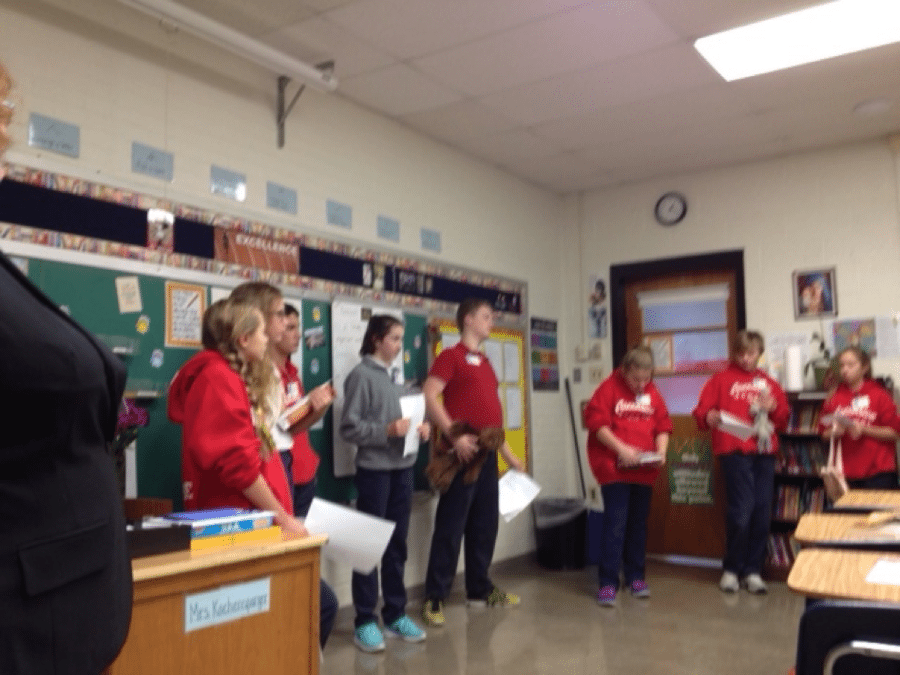
Students present their poems written in lesson taught by Institute participant.
Application of Learning
“Teachers got a lot out of this Institute and seem to be able to incorporate more of it into their classrooms. A teacher pointed to one of her poems on the wall inspired by her work in the Institute. She partnered with a photographer to do an ‘I am From’ project, because she learned something new at the workshop. This in the essence of the Institute, to learn something new and then to apply without being required to. I keep hearing teachers say, I used the ‘River Story,’ ‘I am From,’ ‘Tell Me Something Since the Last Time We Met.’
When I walked into her classroom, she had a three-ring binder with all the students’ poems, and she had four teachers coming to hear the students’ presentations today. The teachers were all ears, they asked her, ‘what inspired you, where did you get the ideas for this.’ One of the teachers said she almost cried….”
—Classroom observation notes
Application of Learning
Teachers explored many ways to transform their teaching and their classrooms:
o“My favorite activities were the daily ensemble-building activities and introductions. I now have so many strategies and activities to take back to the classroom that allow every student to share his or her voice while the entire class is attentive and engaged. The activities would work in any size class, even a class with 30 plus students. This is true not only of the morning activities, but of all the activities and the entire process that was used throughout the summer institute.”
Application of Learning
Teachers realized that the Institute would be relevant to their work:
o“The group of artist included a teacher, and the group has worked with schools both during the school day and as part of an afterschool program. The program is aligned to ELA, Common Core, and College and Career Readiness Standards.”
o“The overall process and structure will make a huge positive impact on my teaching.”
o“Very relevant to the curriculum I teach.”
o“I will use (adapt) virtually everything I learned here in my classroom. I know my classes will be greatly enriched by this experience. “
o“I think our teachers are going to create wonderful lessons. I appreciate the depth of thinking and feeling that our sessions called forth.”
Application of Learning
Moreover, participants planned to share their knowledge with colleagues or disseminate within the school:
o“[I plan] to get failing students’ stories to the teachers that failed them to possibly prevent future failures by informing instruction.”
“As a get-to-know-you exercise for Key Club (snaps & movement).”
o“I hope to build river stories into a whole school system.”
o“I plan to tell the ELA teacher about the river mapping. I think it will help students write essays.”
Application of Learning
o“We will bring some of this into our CAM [club advisor] meetings.”
o“I will be incorporating more from this workshop into my daily classes than from any other workshop I have ever attended. The skills, strategies and content are relative to any curriculum. I would love to see more of these types of programs in our schools. It is a powerful way to investigate one’s own identity and the identities and culture of others.”
o“I was reminded that working within limitations can inspire creative solutions. I was also reminded that deep learning can be generated through short bursts of text.”
4. Changes to Schools

Where I’m From, student poem developed in lesson taught by Institute participant
Changes to Schools
Early evidence suggests that teachers are using their learning to change their classrooms and their approach to teaching.
o“The group that I’m using this with is my eighth grade. The things that we are doing are working well with them. We are spending much of this year on a project called My Story. It has a writing component and an interviewing component.”
o“One of the the best things I have done in a long time is integrate community building into my classroom.”
Changes to Schools
Additional evidence suggests changes based on the Institute:
oLesson plans developed by participating teachers indicate development of lessons that meet Ohio Standards using strategies learned in the Institute.
oInterviews with teachers indicate varied examples of application of River Stories, I am From, and other techniques of Ping Chong + Company.
oTogether, these trends indicate a strong transfer effect in the schools—i.e., the direct replication of Institute learning in the schools and classrooms.
Conclusions
- The 2016 Institute was very successful according to essential measures:
oParticipant satisfaction
oAcquisition of important knowledge and skills
oMotivation of teachers to use their knowledge in their schools
- The Institute has potential to bring about significant change in several areas:
oTeaching methods
oStudent learning
Recommendations
- Continue to conduct research on the impact of the Institute in the schools. This is critical to ensure that teachers have the support and resources needed to make change happen. Such research should include review of teachers’ lesson plans, student work samples, and other artifacts.
- Continue the work with Ping Chong + Company for additional years. The 2016 Institute was predicated on a multi-year commitment, and this procedure is consonant with most research on educational change.
Participant Demographics
Gender

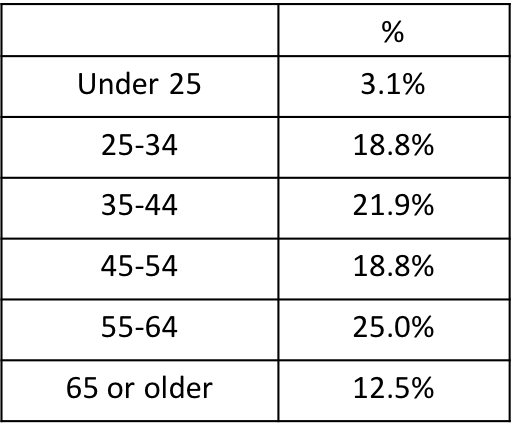
Age
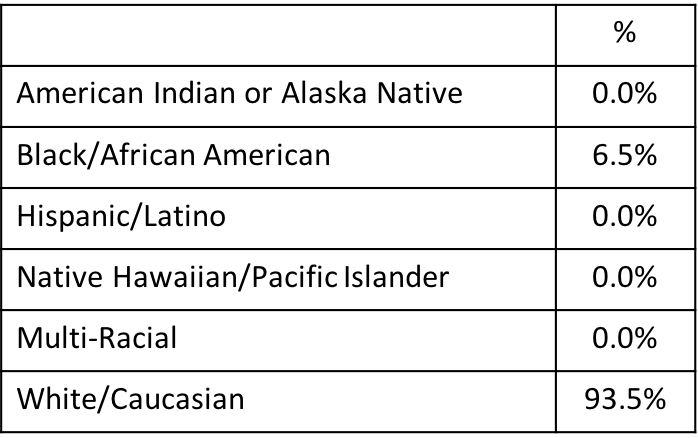
Ethnicity
Participant Role
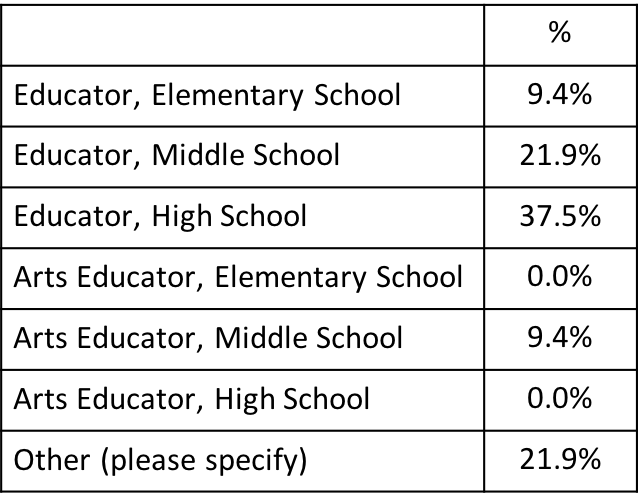
Other: Site coordinator, retired; teacher assistant, special education, administration, consultant, pre-school pre-k aide
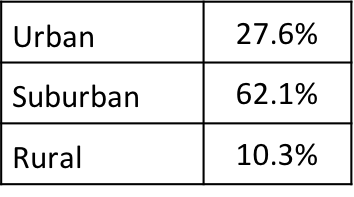
School District
School
For additional information regarding the Institute or this report, contact Muse Machine at: https://musemachine.com/contact